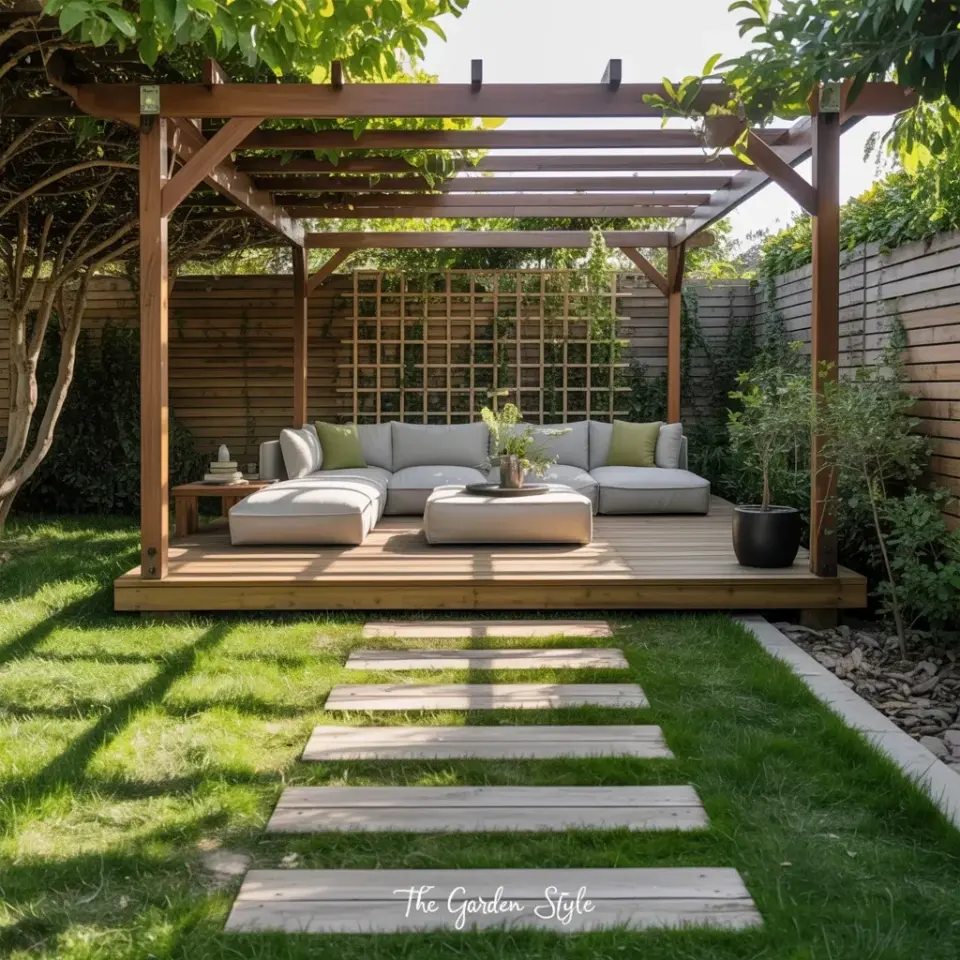
Ok so here’s the thing: I’m not usually a deck person. But when I saw this modern pergola setup with the elevated deck and that sage green sofa, I actually stopped scrolling. Like, full stop, thumb frozen mid-air. The dark brown beams frame the whole space without making it feel heavy, and the L-shaped sectional with those sage pillows just pulls it all together. Honestly, this isn’t just another garden pergola ideas pin. It’s the kind of spot where you’d actually want to sit and watch the sun fade, not just take a photo for the grid. And the climbing vines on the trellis? That natural touch makes the whole thing feel like it’s been there for years, not just installed last weekend. So if you’re planning an elevated deck design and wondering whether a covered seating area is worth the hassle, keep reading. I have opinions. Real ones.
Why an Elevated Deck Changes the Whole Outdoor Game
Look, ground-level patios are fine. But an elevated deck? That’s different. You get this sense of floating above the garden, especially when the deck is raised on proper wooden support beams like the ones in the photo. The natural wood finish keeps it warm, not cold and sterile like composite sometimes looks. Here’s the thing: an elevated deck also gives you better drainage and airflow underneath. Less rotting wood, fewer creepy crawlies. I learned that the hard way after my first ground-level platform turned into a slug convention. Now I only design elevated. It just sits better in the landscape, especially when you have a garden path leading up to it like the one in this photo. That transition from gravel or stepping stones to wood makes the whole backyard feel deliberate.
Picking the Perfect Modern Pergola for Your Specific Deck
Not gonna lie, I’ve seen a lot of bad pergolas. Flimsy metal ones that wobble in the wind. White vinyl that yellows after one season. But this dark brown wooden modern pergola in the photo? It’s the real deal. The beams are thick, the posts are sturdy, and the color matches the deck without being identical. That’s key: you want contrast, not camouflage. Here’s a weird personal detail: I once spent three weekends staining a pergola only to realize I’d used the wrong shade of brown. It looked like a mud puddle. So take it from me, test your stain on a scrap piece first. For a modern pergola, go with something matte and deep. Espresso or charcoal brown. It frames the space without stealing the show from your furniture and greenery.
The Sage Green Sofa Isn’t Just a Trend, It’s a Strategy
That L-shaped sectional with sage green pillows and a matching ottoman in the photo? I was skeptical at first. Thought it would look too “catalog.” But honestly, sage is a genius choice for outdoor deck seating. It’s soft enough to feel relaxed but still has enough pigment to hide the inevitable grass stains and coffee spills. Plus it plays nicely with the climbing vines and the natural wood tones. If you’re building a garden pergola ideas board, put sage sofa at the top. And don’t sleep on the rectangular ottoman either. It doubles as a coffee table when you slap a tray on it, or as extra seating when your cousin shows up unannounced (which he always does). One tip: get cushions with removable covers. The sun will fade them eventually, even the best fabric.
Climbing Vines on a Wooden Trellis: The Slow Payoff
I love how the trellis wall behind the sofa is covered with climbing vines in the photo. It adds that lived-in texture that no amount of throw pillows can replicate. But here’s the reality check: vines take time. You can’t just buy a full-grown plant at the nursery and expect it to look this good overnight. I tried that. The roots were so tangled it died within a month. So if you want that lush green backdrop for your wooden trellis, start with fast-growing climbers like clematis, jasmine, or climbing hydrangea. Train them early. Weave them through the trellis slats. And be patient. By year two, you’ll have that natural curtain that makes your modern pergola feel like a secret garden. If you live somewhere with harsh winters, choose something that dies back and regrows. Less maintenance, more charm.
Arranging Your Outdoor Deck Seating for Actual Comfort
You’d think placing a sofa on an elevated deck would be straightforward. It’s not. I’ve made the mistake of pushing the L-shaped sectional right against the railing, which meant everyone had to climb over the ottoman to sit down. Not great for a relaxed vibe. In the photo, the sofa is pulled slightly forward, leaving room behind for the trellis and some airflow. Smart move. For your outdoor deck seating, think about traffic flow: where will people walk to get to the steps? Leave a clear path. Also consider the sun angle. If your deck faces west, that dark brown pergola might not provide enough shade by 4 PM. You might need a retractable canopy or some dense vines. Honestly, the best arrangement lets you see the garden path while still feeling enclosed. That’s why the photo works so well: the sofa faces outward but the trellis and pergola create a cozy back wall.
- Pull the sofa away from the railing by at least 18 inches for air circulation and easy walking.
- Add a small side table for drinks, but keep it low so it doesn’t block the view.
- Use outdoor rugs to define the zone, especially on a wood deck that can splinter.
- Put the ottoman at an angle for a more casual, conversational feel. Straight lines are for conference rooms.
Seasonal Touches That Keep This Setup Looking Fresh
This is the part where a lot of bloggers get vague. They say “add seasonal decor” and call it a day. I’m going to be specific. For spring, get those climbing vines to pop with a few pots of trailing lobelia along the deck edge. Come summer, swap the sage pillows for linen covers in a lighter shade (still green, but breezier). In autumn, the dark brown beams actually look incredible against crisp orange leaves, so don’t change anything. Just let nature do the work. Winter is tricky for an elevated deck design because the wood can get slippery. Install some non-slip strips on the steps, and if you can, cover the sofa with a weatherproof furniture cover. The sage green will thank you. And honestly? Leave the vines bare in winter. Their twisted branches against that brown trellis are sculptural. Way better than fake garlands.
A Couple Practical Things Nobody Tells You About Deck Pergolas
One: wind. An elevated deck catches more breeze than ground level. That’s great in July, not great when your napkin flies into the garden. A wooden trellis with vines acts as a windbreak, which is another reason the photo setup is so smart. Two: hardware. Use stainless steel screws for everything. I had a friend who used regular deck screws on his modern pergola and they rusted within a year. Three: lighting. String lights are fine, but consider low-voltage LED strips under the pergola beams. They cast a warm glow at night without blinding you. And four: bugs. Elevated decks have fewer crawling insects than ground patios, but mosquitoes still find you. A ceiling fan on the pergola helps, or a couple of citronella plants in pots near the sofa. Small tweaks, big difference.
So that’s my honest take on this modern pergola and elevated deck combo. The sage green sofa, the climbing vines, the dark brown framework. It’s not just a pretty photo. It’s a functional, year-round outdoor room that actually makes you want to go outside. Would you try this look on your own deck? Or do you have some weird wood stain horror story to share? Let me know in the comments. I always read them, even the spicy ones
#modern pergola #outdoor deck seating #garden pergola ideas #elevated deck design #wooden trellis
Leave a Comment