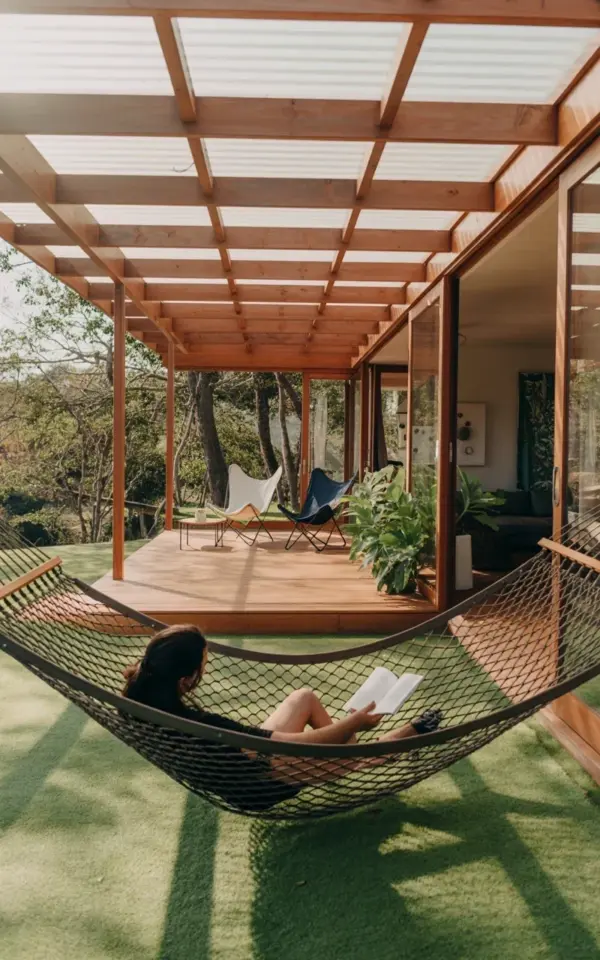
When we decided to build a budget suspended hammock deck on artificial turf, we wanted something that felt like a weekend getaway without the price tag. Our backyard had a narrow strip of concrete next to the glass sliding doors, and we saw potential for a cozy lounging spot. This project cost us under $800 and took two weekends, and the result is a space that gets used every sunny afternoon. Here is exactly how we did it.
Finding the Perfect Spot for Your Hammock Deck
Before buying any materials, we spent an afternoon measuring the area next to our house. The existing concrete patio was only 10 feet wide but ran the full length of the back wall, which had floor to ceiling glass sliding doors with wooden frames. We decided to build the deck structure directly over that concrete so we wouldn’t have to pour a new foundation. The key was picking a spot that got afternoon shade from the house eave, since we planned a corrugated metal roof but wanted some natural light. If your yard has a similar layout, look for a flat section at least 8 feet wide and 12 feet deep. That gives enough room for the hammock netting and a couple of chairs.
Building a Simple Wooden Deck Frame
We used pressure treated 4×4 posts for the corners and 2×6 beams for the horizontal supports. Our design is a freestanding structure that sits on four concrete deck blocks, so we didn’t have to mess with digging footings. After leveling the blocks, we assembled the frame on the ground and lifted it into place with a friend. The posts are 8 feet tall on the front side and 7 feet tall on the back, creating a gentle slope for rainwater runoff. We attached the beams with galvanized brackets and added cross bracing at the corners. This frame took about four hours to build, and you can find the same lumber at any home center for roughly $150 total.
- Materials needed: 4×4 posts, 2×6 beams, concrete deck blocks, galvanized brackets, wood screws.
- Tools: Circular saw, drill, level, tape measure, socket wrench.
- Tip: Pre drill all holes to prevent splitting the pressure treated wood.
Installing a Corrugated Metal Roof on a Deck
For the roof we bought white corrugated metal panels cut to 10 foot lengths. We laid them across the top beams, overlapping each panel by one rib, and screwed them down with neoprene washer screws. The white color reflects heat and keeps the hammock area cooler on hot days. We also added a simple gutter along the low side to direct water away from the glass doors. This part was straightforward, just make sure you wear gloves because the metal edges are sharp. The total roof cost was about $120, and we finished installation in two hours.
Laying Artificial Turf on a Budget Deck
Instead of planting grass under the structure, we chose artificial turf for low maintenance and a consistent green look. We ordered a roll of medium pile turf from a local supplier, measuring 10 feet by 12 feet, which cost $80. First we cleaned the concrete surface and laid a weed barrier fabric. Then we cut the turf to size, leaving a two inch gap around the edges to tuck in later. We secured it with landscape staples, but you can also use double sided tape if you don’t want staples showing. The turf feels soft underfoot and looks just like real grass in photos. It also drains well, so morning dew dries quickly.
How to Suspend a Hammock Netting Platform
This was the trickiest part. We wanted a suspended hammock netting that could hold two people, but we didn’t want to install heavy duty eye bolts into the glass door framing. Instead, we ran a horizontal 4×6 beam between two of the deck posts at a height of 6 feet. We then attached two heavy duty steel rings with lag screws into that beam, spacing them 7 feet apart. For the hammock itself, we used a dark brown mesh netting with a spreader bar at each end. We hooked the carabiners onto the rings, adjusted the height so the netting hung about 18 inches off the turf, and tested the weight. It holds up to 400 pounds comfortably. Just make sure your beam is securely braced, because the lateral force is significant.
Budget Outdoor Furniture for a Hammock Deck
To keep the vibe relaxed without spending much, we sourced used pieces and a few new items. The white butterfly chair came from a thrift store for $15, and we painted the frame with rustproof spray paint. The navy blue lounge chair was a clearance find at a big box store for $40. We added a small side table made from a wooden crate and a couple of throw pillows in neutral tones. In the background of our photo you can see green potted plants, which we bought from a nursery for $10 each. The total furniture cost was under $100, and everything matches the dark mesh hammock and white roof nicely.
Final Touches: Shade, Plants, and Personal Style
We added a few tall potted ferns near the glass doors to soften the transition between inside and out. The artificial turf gets a quick rinse with the hose every couple of weeks to keep it dust free. For lighting, we strung a simple battery operated LED pendant from the roof beam, which gives a warm glow at dusk. If you want more shade, you can hang outdoor curtains on a tension rod between the posts. But for us, the roof already blocks the harsh afternoon sun, and the hammock netting feels like a floating nest. We love that we can walk out the sliding glass doors, kick off our shoes, and lie down without worrying about mud or grass stains.
Building our budget suspended hammock deck on artificial turf turned a boring concrete pad into our favorite weekend retreat. The whole project took about three days of work and cost less than $600, not counting a few borrowed tools. If you have a small backyard and a hankering for a lounge spot that looks way more expensive than it is, give this build a try. Pin this idea for your own backyard makeover and let me know how your version turns out.
#hammockdeck #budgetbackyard #artificialturf #outdoorliving #diydeck
Leave a Comment