If you have ever tossed a few generic petunias into a terracotta pot on your patio only to watch them turn into crispy brown skeletons by mid-July, you are not alone. That is exactly the kind of mistake I made my first summer after moving into a place with a tiny stone patio. I figured flowers are flowers, right? Wrong. Choosing the wrong potted patio flowers is the fastest way to waste money and end up with sad, wilted plants you have to explain to your neighbors. So let me save you the heartache. I learned the hard way (and my poor petunias paid the price) that some flowers thrive in containers and others simply do not. Here is what actually works.
The biggest container gardening mistakes that kill patio flowers
Honestly, the main culprit is thinking any plant can survive in a pot. Look, a flower bred for open garden soil has deep roots that spread horizontally. Stick that same plant in a container and the roots hit the wall, they hit the bottom, and they start circling like a trapped animal. The plant never gets enough water because the soil dries out faster than you think. And then you overwater to compensate, which rots what is left of the root system. It is a mess.
Another classic error: choosing flowers that need constant deadheading. I am not gonna lie, I do not have time to pinch off spent blooms every single morning. Neither do you. So if a plant demands that level of attention, skip it for pots. Stick with low-maintenance varieties that either self-clean or look good even with a few faded flowers hanging around.
Best flowers for pots outdoors: the proven trio
Based on my own trial-and-error (and a lot of staring at other people’s patios with envy), three flowers stand above the rest for container life. Foxgloves. Petunias. Geraniums. Yes, it sounds simple, but here is the twist: not all foxgloves are equal, and not every petunia works. Let me explain.
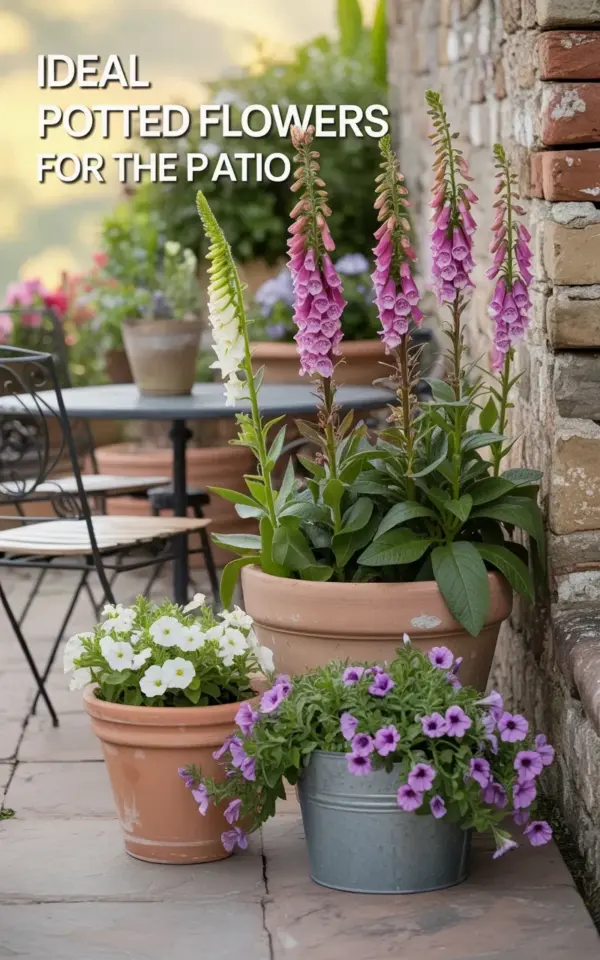
In the photo you see a large terracotta pot with tall pink foxgloves (Digitalis purpurea) rising like spires against a weathered stone wall. Foxgloves have a taproot that actually adapts reasonably well to deep pots, as long as the container is at least 12 inches deep. They are biennials, so you get two seasons of vertical drama. The small white petunias in the left pot? Those are a trailing variety that spill beautifully without getting leggy. And the purple petunias cascading from the gray metal planter? That is the wave petunia type, bred specifically for containers. Compact geraniums (the zonal kind, not the scented ones) round out the trio. They stay tidy, bloom nonstop, and do not mind cramped conditions.
Patio flower arrangement ideas that actually look good
Arranging pots on a stone patio is all about contrast. Contrast in height, texture, and color. Place a tall foxglove pot in the center or back (like the photo shows against that stone wall). Flank it with lower, trailing pots. The white petunias on the left and the purple petunias in the gray planter create that soft spill-over effect that softens the hard edges of stone and mortar joints. One odd tip I learned: put a brick under one side of a pot to tilt it slightly forward. It makes the trailing plants hang more dramatically and catches morning light better. Weird but true.
Another arrangement trick: group pots in odd numbers. Three pots is a classic. Use different materials too. That terracotta pot in the center, the smaller terracotta on the left, and the gray metal planter on the right break up the monotony. If everything is the same color pot, it looks like a plant nursery aisle. Mixing finishes (matte clay, glazed ceramic, painted metal) adds depth without any extra effort on your part.
How to avoid the most frustrating patio container gardening problems
Ok so let us talk about the practical stuff. The number one frustration I hear from friends: “I water every day and my flowers still look terrible.” Here is the thing. Containers dry out faster than ground soil, especially on a stone patio that heats up like a pizza stone. But daily watering can also wash away nutrients and compact the soil. The fix is not to water more, it is to water smarter. Use a potting mix with water-retaining crystals or mix in some compost. Also, group your pots close together so they shade each other’s soil. That reduces evaporation.
Drainage is the other silent killer. I once used a beautiful ceramic pot with no drainage hole and drilled one myself with a masonry bit. Worth it. If you cannot drill, double-pot: put the plant in a nursery pot inside the decorative one. Lift it out to water, let it drain, then put it back. Annoying but effective. And honestly, if you see yellowing leaves on your petunias, that is usually overwatering. If the leaves look dusty and pale, it is underwatering. Get a moisture meter if you are unsure. They are like ten bucks.
Why these specific potted patio flowers work (and others don’t)
Foxgloves thrive in containers because they have a rosette growth habit that stays low for the first year, then sends up that tall flower spike. The spike does not need a huge root mass. For petunias, look for the “cascading” or “spreading” label. The old upright petunias get gangly and need constant trimming. The trailing ones, like the white and purple ones in the photo, naturally drape over the pot edge and keep flowering without you asking. Geraniums are just tough. They store water in their thick stems, so they tolerate some neglect. Put them in a sunny spot and they basically run on autopilot.
One flower I see all the time in pots that I never recommend: impatiens. They look pretty in the garden center but they hate direct sun and wilt the second the temperature hits 85. On a stone patio that reflects heat, impatiens are a death sentence. Stick with the trio. Maybe add a few trailing lobelia or sweet potato vine for filler, but do not make them the star.
Choosing the right containers for your patio garden
Not gonna lie, potting material matters more than you think. Terracotta (like the large pot with foxgloves) is porous. It breathes, which helps prevent root rot, but it also dries out fast. So use it for plants that like to dry between waterings, like geraniums. Metal planters (like the gray one with purple petunias) look modern and hold moisture better because they are non-porous. But they heat up in direct sun, so line the inside with bubble wrap or a plastic pot to insulate the roots. Plastic pots are cheap and retain moisture, but they look, well, cheap. Paint them or hide them inside a decorative outer pot.
Here is a quick checklist for pot shopping:
- Drainage hole: non-negotiable. If it lacks one, you will regret it.
- Size: at least 10 inches wide for petunias, 12+ for foxgloves. Smaller pots dry out hourly.
- Weight: consider where the pot sits. Heavy stone looks great but is a pain to move when frost hits.
- Color: dark pots absorb heat, which can cook roots on a hot patio. Light colors reflect heat.
Give your potted patio a fresh start this season
So here is the takeaway: stop buying flowers by their picture on the tag. Read the fine print, look for “container-friendly” or “trailing” or “compact.” Go with foxgloves for height, trailing petunias for spill, and compact geraniums for steady color. Arrange them in groups of three on your stone patio, mix up your pot materials, and do not overwater. You will end up with a thriving little garden that makes every morning coffee out there feel like a mini vacation. Ready to replant? Grab a trowel and get started. Your patio is waiting for its upgrade.
#potted patio flowers #patio container gardening #best flowers for pots outdoors #patio flower arrangement ideas #container gardening mistakes
Leave a Comment